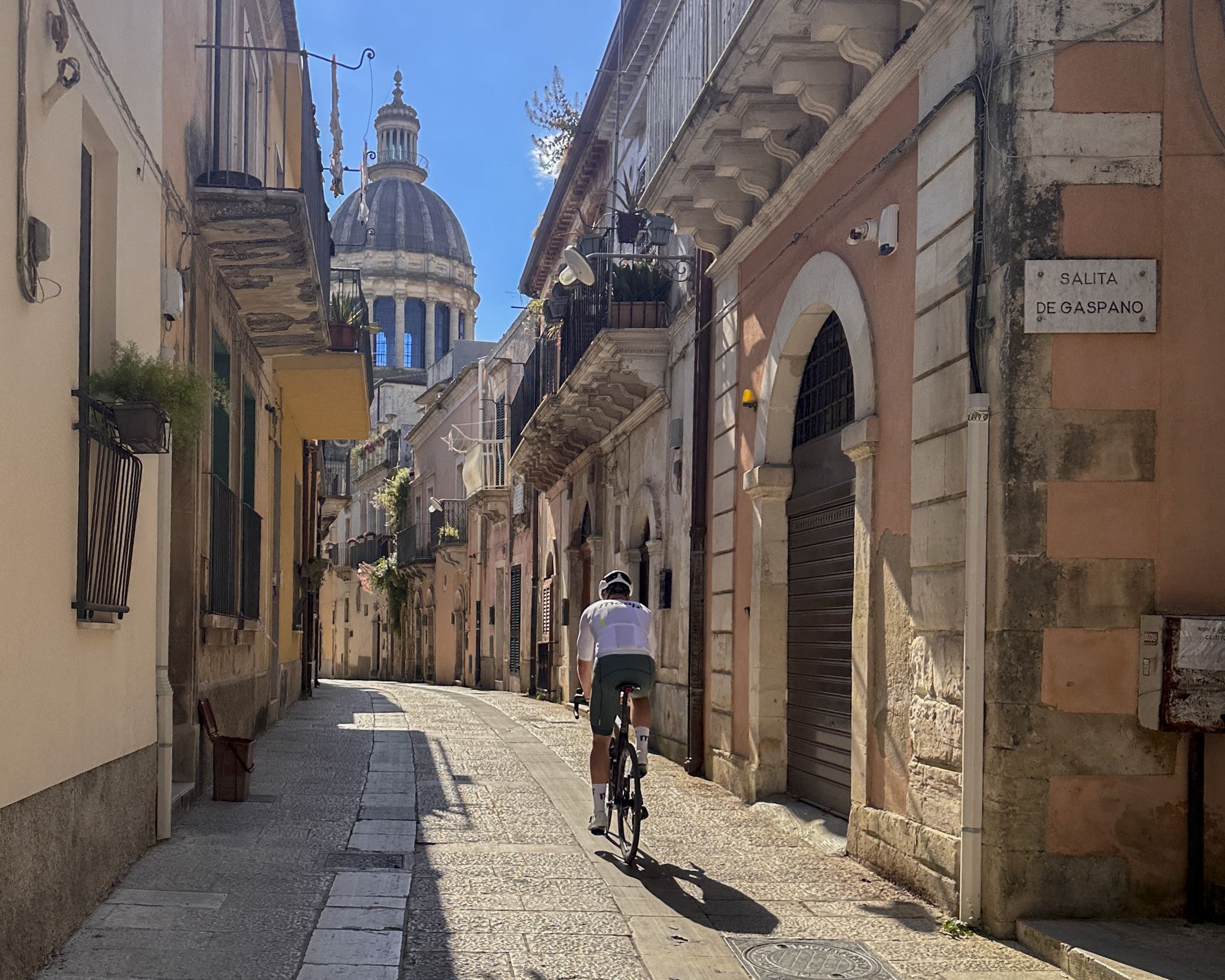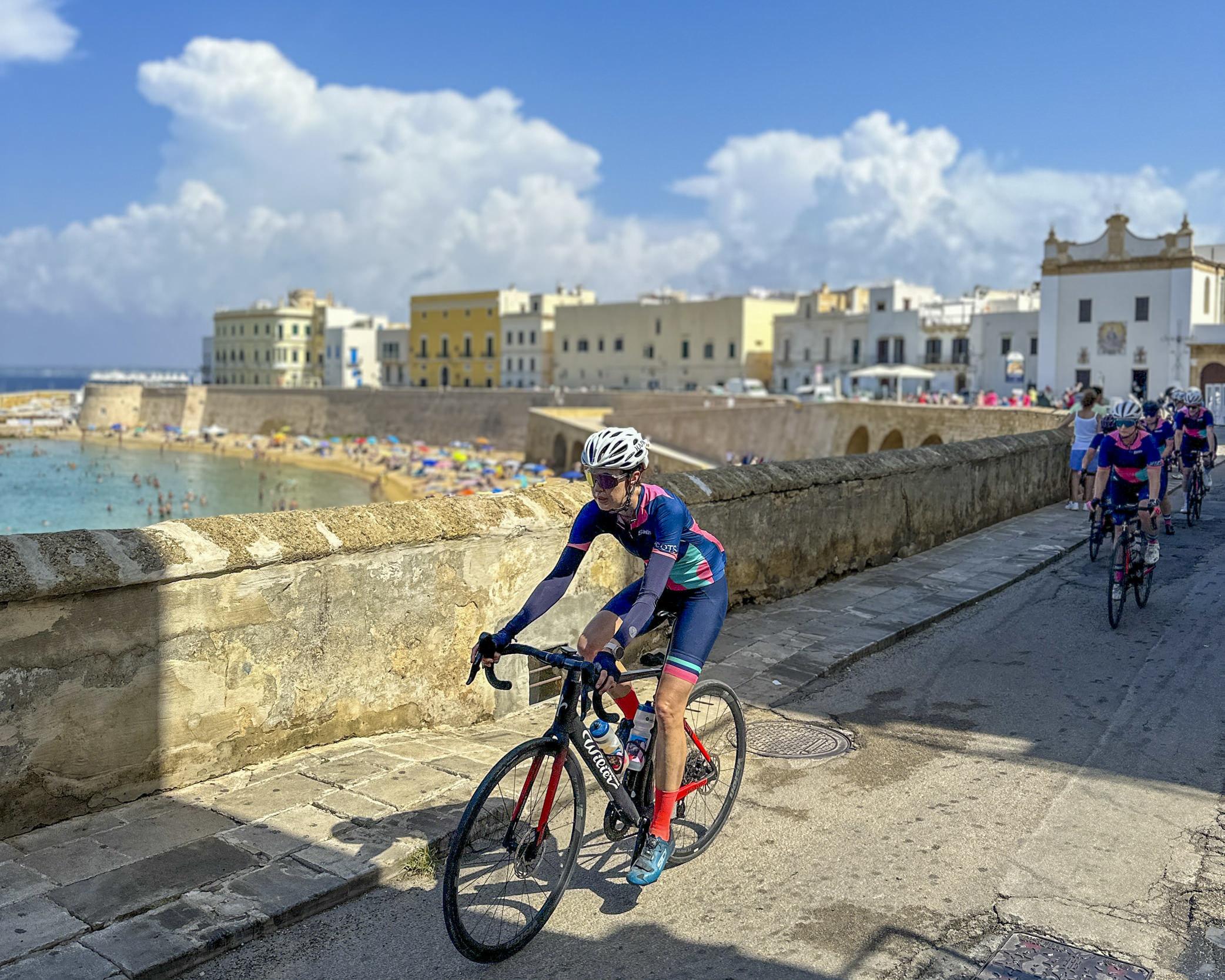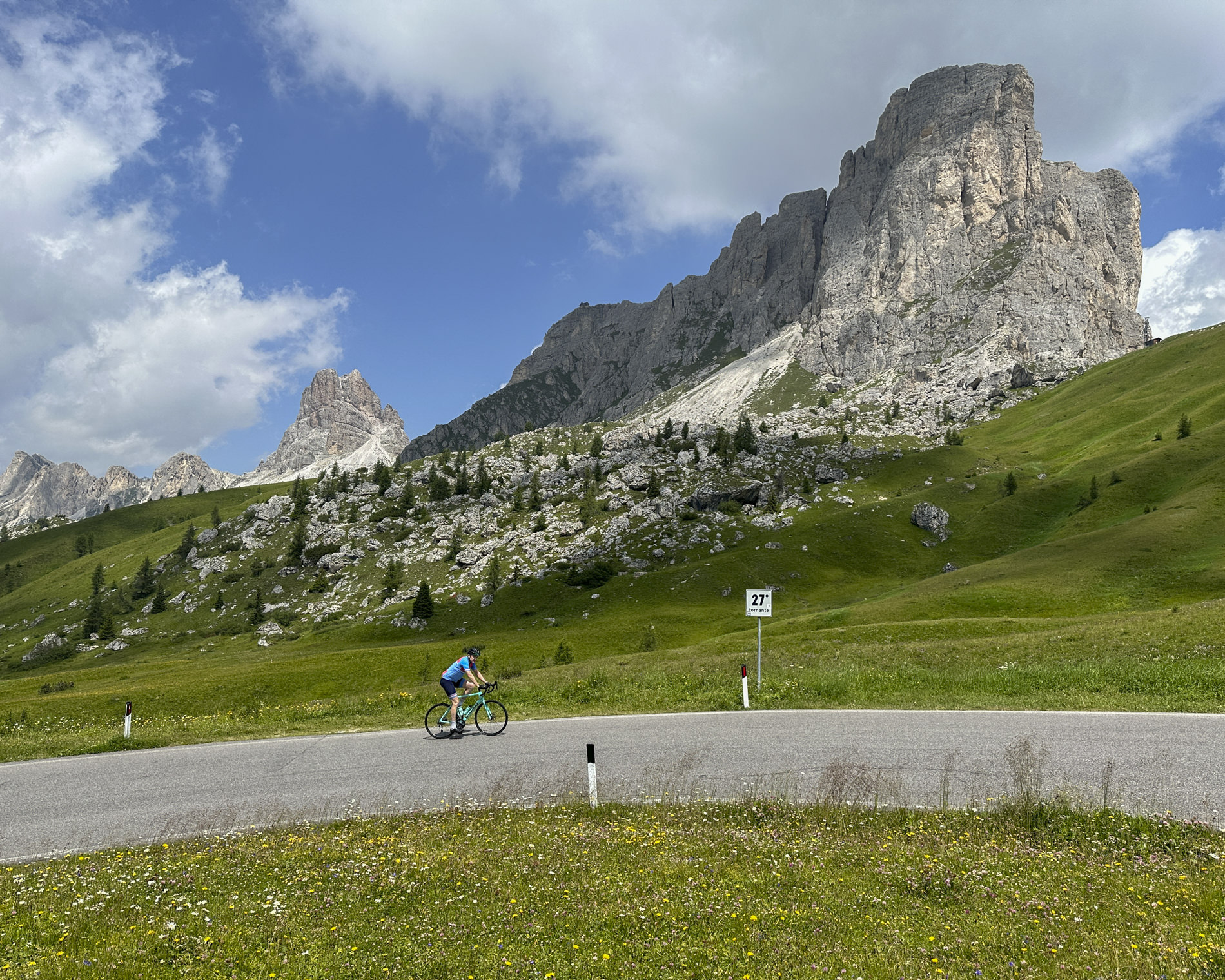
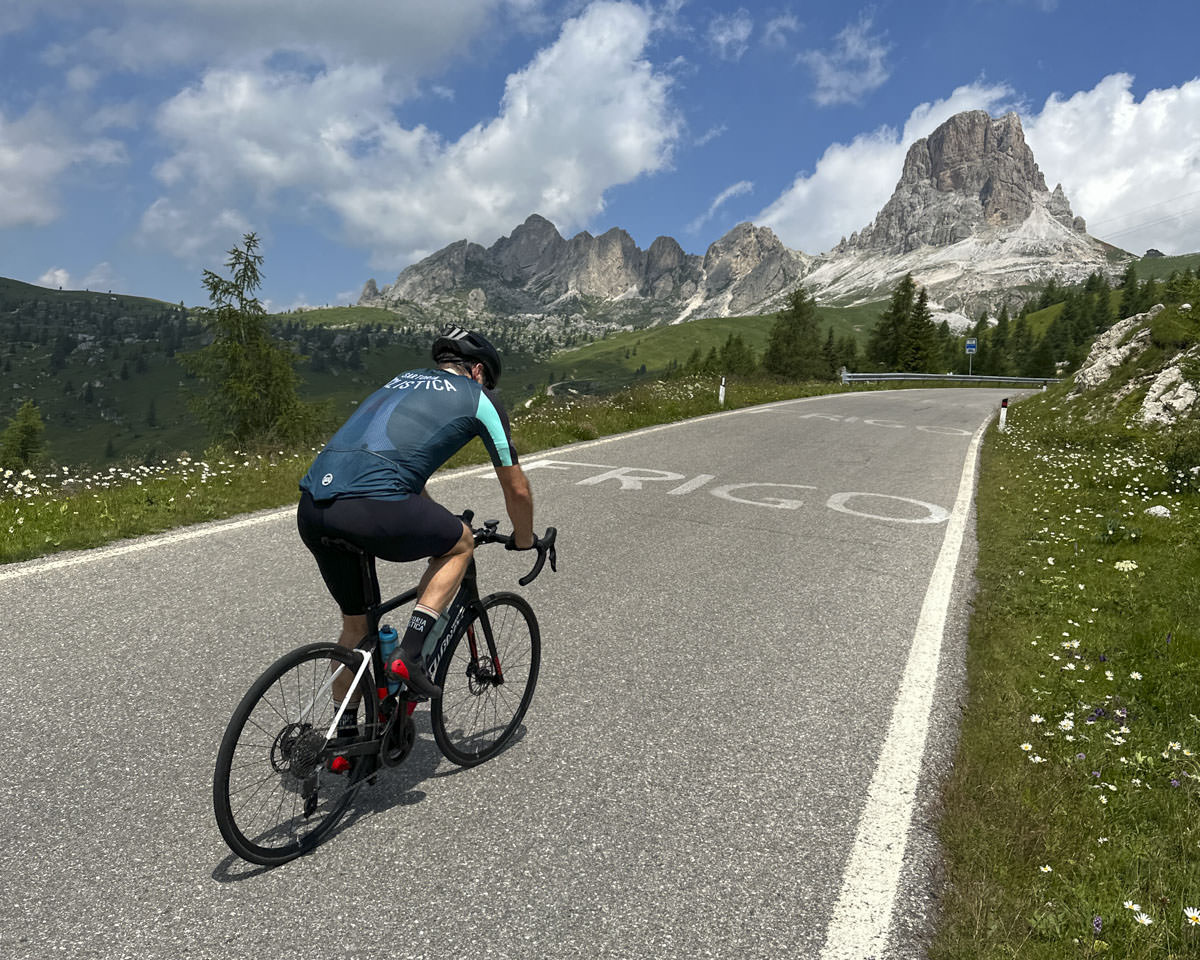
Whether you’re joining us in Puglia, Tuscany, taking on the iconic climbs of the Stelvio and Dolomites, or another destination in Italy, the right preparation ensures you enjoy every kilometre – not just get through it.
Having ridden with our guests in Italy for over 10 years, there are some key tips and insights I’ve learnt to help you best prepare for your cycling holiday.
People often underestimate the impact of riding consecutive days in Italy’s challenging terrain. The answer is less about pure fitness and more about specific preparation. It’s not about being the fastest in the group – it’s about arriving ready for the specific tour you’ve chosen. The more prepared you are, the more you’ll be able to enjoy the scenery, the culture, and the experience as a whole.
In this blog, I’ll share the key cycling endurance training tips I recommend to help you prepare for your upcoming cycling holiday in Italy.

#1 Start your training early
If you’re already a regular cyclist, you’ll have some “muscle memory” to draw on. This gives you a solid head start, but you’ll still want to start early. If you’re relatively new to cycling, you can still prepare well with the right approach.
We’ve had guests start almost from scratch and still complete every ride. One rider had only been on a road bike for four months before joining our Puglia tour. With smart, consistent training, they finished all the riding and had a fantastic experience.
The key – whether you’re an experienced cyclist or new to cycling – is the right preparation and committing to the training window you have.
When should I start training?
We recommend starting your training ideally 12-16 weeks out from your tour. This gives you enough time to build endurance and increase your weekly volume.
Starting early also gives you room for the unexpected – busy weeks at work, bad weather, or the occasional missed ride. When you start with a generous window, you can stay consistent without feeling pressured or needing to “cram” in too much training in the final weeks.

#2 Train for the ride you’ve picked
Once you’ve locked in your tour, start training for the reality of the route. Every region in Italy offers a different riding experience, and the more your preparation mirrors the terrain, elevation, and effort you’ll face, the smoother your first few days on tour will feel.
Going to the mountains? Prioritise hill repeats and strength on climbs. Expecting long days in the saddle? Work on tempo rides and endurance.
You don’t want the first day on tour to be a shock to the system. The more your training mirrors the terrain and effort of the tour, the smoother the transition will be and the more you’ll enjoy your cycling holiday.
Here is my recommendation for a practical approach:
- #1 Pick two or three of the hardest days on your tour. I’d recommend the longest day, and the day with the most elevation and the least kilometres.
- #2 Find local loops that mirror these characteristics. Once you can ride those comfortably, you’ll know you’re on your way to being ready for your cycling holiday.
- #3 What if where I live doesn’t have the same terrain?
If you live somewhere flat but you’ve booked a climbing‑heavy trip, you can still prepare well. Simulate elevation with low‑cadence strength work, indoor trainer sessions, and routes that mimic the effort of climbing.
If you’re still deciding when to travel or what conditions to expect, our guide on the best time to ride in Italy is a great place to start.

#3 Add indoor sessions into the mix
Indoor training is one of the most effective ways to build strength and consistency, especially if you’re short on time or dealing with unpredictable weather. Not everyone has hills nearby, so using an indoor trainer to simulate elevation is also a smart way to build climbing strength.
There are a few reasons I recommend attending indoor sessions with a trainer:
- #1 Your training isn’t dictated by weather or temperature. This means you stay consistent with your training schedule.
- #2 They’ll push you harder. A structured session or coach will often push you harder than you might push yourself.
- #3 You’ll be more accountable. This is often half the battle – if you’ve got someone you have to show up for, you’re more likely to do it.
We’ve had guests train almost entirely indoors due to the climate in their home region, and they still arrived in excellent condition.
If you don’t want to get a trainer, you can also get some of the benefits by supplementing your outdoor rides with indoor rides. One thing I often do is start with an outdoor ride, then jump on the Wahoo Kickr to add 600-1000 metres of elevation. This provides a good balance of indoor and outdoor conditions, with elevation added in.

#4 Ride back to back on tired legs
Riding on tired legs is one of the most important parts of preparing for a cycling holiday.
On tour, it’s the consecutive days of riding, especially from day 4, when fatigue starts to set in. If you’ve trained for that feeling at home, you’ll handle it far better and often feel even stronger by days 6 and 7.
One big ride each weekend doesn’t prepare you for a week of riding in Italy. You need to arrive with km’s in your legs and a body that is accustomed to the feeling of fatigue.
We see it every season – riders who rely only on their usual weekday rides feel good early in the tour but slow down by days four and five as cumulative fatigue sets in. Those who train back‑to‑back arrive ready for the rhythm of the week.
Most of us don’t generally get the opportunity to ride 7 days in a row, so here is how I’d recommend you build fatigue into your training:
How to start
- Start with 2 days in a row
- Build to 3 (ideally 4)
- Have a rest day in between
- Repeat for 4-5 weeks out
Aim for two to three back‑to‑back 70km rides to help your body adapt. For more challenging tours, aim for three consecutive rides up to 90km is ideal.
It’s consistency throughout the week – not just the big weekend rides – that makes the biggest difference once you’re in Italy.

#5 Stay focused on your goal
The best way to stay motivated during your training is to stay focused on your goal: to arrive in Italy feeling confident and ready for an amazing riding experience.
Cycling tours aren’t just physical, they’re mental too. There will be days with challenging weather, longer climbs than you expected, or moments when your legs simply don’t show up.
But I think there’s nothing more rewarding than getting to the top of a climb in the Dolomites or arriving in a beautiful, small village after a long day on the bike and you still have the energy and enthusiasm to take in the landscape and appreciate and enjoy where you are and what you have done . So keeping this end goal in mind helps your training feel more purposeful.
If you go in knowing there will be moments of fatigue or self‑doubt, it’s much easier to ride through them. Your determination and persistence are a big part of what makes these trips so rewarding.
Similarly, preparing for a cycling tour isn’t always comfortable. There’s no escaping the tiredness that comes with long rides. We often say that every rider has two choices: you can experience that discomfort at home during your training, or you can experience it on tour.
Our strong recommendation is to put in the hours before you depart. When you arrive with a solid base, you get so much more out of the week – more confidence on the climbs, more enjoyment in the descents, and more energy to soak up everything that makes these tours special.

#6 Include recovery in your preparation
It’s not just the riding that counts. Sleep, stretching, and active recovery are what allow you to wake up ready to do it again.
Simple things like foam rolling, stretching your hips and hamstrings, and getting adequate fuel after a ride make a massive difference. On tour, your pre-tour preparation and your recovery are the difference between feeling strong on day 5 or just hanging on.
I’d recommend you bring some small recovery tools with you on tour – a spikey ball for tight spots, a stretch band, and magnesium can all help.

When should cycling endurance training finish?
You’ve done all the hard work preparing, and now it’s nearly time to head to Italy. So, when do you finish up your training?
A good rule of thumb is to complete the bulk of your endurance training about one week before your tour begins. This gives your body time to absorb the work you’ve done, recover well, and arrive feeling fresh rather than fatigued.
You can keep up some active recovery during this week – like walking, stretching or swimming – but nothing too strenuous that will leave you more fatigued.
If you have any questions about your training, we are here to help you prepare for an unforgettable week on the bike.
If you haven’t yet booked your cycling tour in Italy, we can help you choose the right tour for your experience. Please send us a WhatsApp message with any questions you have.